
Take a step back and think about your elementary school nutrition class. For some of us, that was about 10 years ago; for others, it might take a little more effort to remember. A friendly nutrition extension agent would visit the classroom with fun snacks and colorful activities. For an hour, you’d talk about what goes on your plate, how to build a balanced meal, and why drinking water matters—while your teacher catches up on grading in the back of the room.
One of the core memories from those lessons is the food pyramid. It’s something many of us were taught once and haven’t thought much about since—until recently.
On January 7, 2026, U.S. Department of Health and Human Services Secretary Robert F. Kennedy Jr. and U.S. Department of Agriculture Secretary Brooke Rollins released the 2025–2030 Dietary Guidelines for Americans. These updated guidelines flipped the original Food Guide Pyramid introduced in 1992, which previously placed a heavy emphasis on whole grains alongside fruits and vegetables.
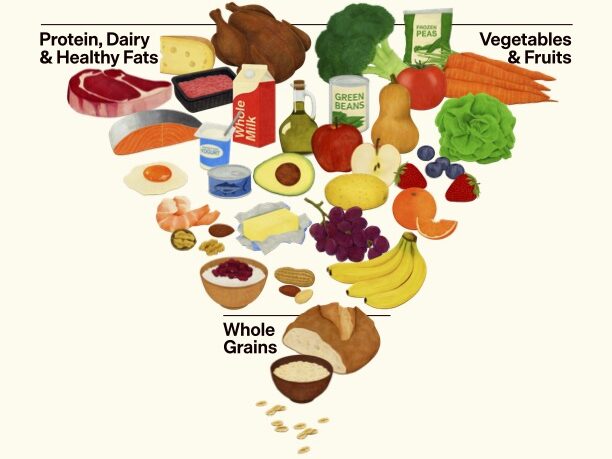
The new guidelines position meat, dairy, poultry, eggs, and seafood at the top of the pyramid, highlighting the importance of having protein and healthy fats in our daily diets. Throughout the report, there is a clear emphasis on eating “real food.” These “real foods” are defined as nutrient-dense and minimally processed. Naturally, this raises an important question: what does this shift mean for animal agriculture?
Why the Dietary Guidelines Matter
The Dietary Guidelines for Americans may seem like just another government report, but they play a major role in shaping how Americans eat. These science-based recommendations help promote health, prevent disease, and ensure nutrient needs are met through food and physical activity.
More importantly, they may influence what food ends up on family dining room tables across the country. The guidelines also inform school meal programs and other government-funded nutrition initiatives, helping determine meal requirements and purchasing decisions. Because of this, updates to the guidelines have real-world implications for how schools operate and where they source their food. One notable shift in the new guidelines is the recommendation to prioritize animal protein at every meal.

A Focus on Real Food Creates Opportunity for Animal Protein
Another key theme in the updated guidelines is a shift away from “highly processed foods” and toward “real food.” This focus on whole, minimally processed options creates meaningful opportunities for American farmers and ranchers who produce meat, dairy, poultry, eggs, and seafood.
While the report encourages limiting highly processed foods, it does not single out meat products. In fact, the guidelines recognize fats from meat, poultry, eggs, butter, and beef tallow as part of a healthy diet, rather than placing exclusive emphasis on plant-based oils. The report also supports full-fat dairy products that do not contain added sugars.
For many in agriculture, this reflects a long overdue recognition of the essential nutrients animal-based foods provide.
Increased Demand and a Growing Conversation
By emphasizing the importance of having protein at every meal, the new guidelines are likely to increase demand for meat, dairy, poultry, eggs, and seafood. At the same time, they have sparked broader conversations about animal protein—not just around the dinner table, but across media platforms and policy discussions.

Several animal rights groups have publicly criticized the updated guidelines and called for their withdrawal. As these conversations continue, it is critical that those connected to agriculture remain engaged and continue sharing science-based, transparent information about the role animal protein plays in a healthy diet.
As conversations around animal protein continue to grow, having credible, easy-to-use resources is essential. The Animal Agriculture Alliance’s Meat Matters Guide was developed to help explain the nutritional role of meat in a clear, science-based way.
Designed for farmers, educators, and industry partners alike, the guide breaks down key nutrition facts, addresses common misconceptions, and provides talking points grounded in research—making it a helpful tool for engaging with consumers, policymakers, and other stakeholders regarding the nutritional value of animal protein.
Helpful Resources:
All posts are the opinion of the author and do not necessarily represent the view of the Animal Ag Alliance.