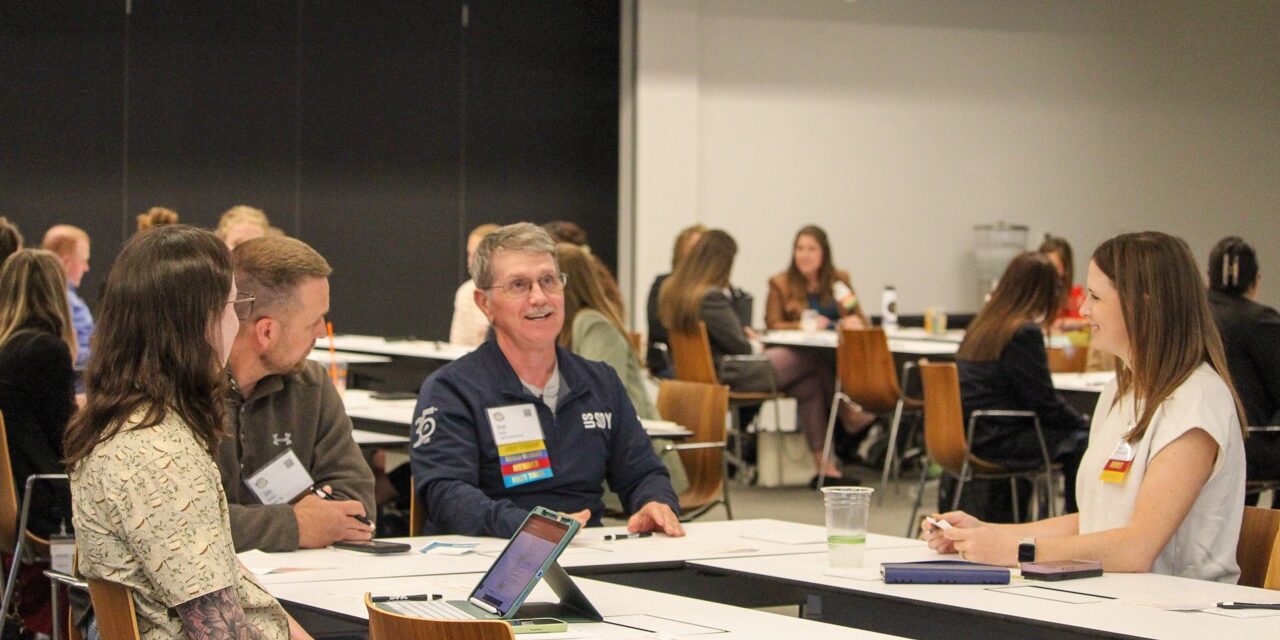
In early May, the Alliance hosted its 2026 Stakeholders Summit, themed “High Steaks: Navigating Pressure on Animal Protein.” Held in Kansas City, the Summit brought together more than 200 attendees from across the food supply chain, including students, farmers, food processors, retailers, legislators, government agencies, media, and allied industry partners.
This year’s event featured a dynamic lineup of speakers representing a wide range of commodities and sectors across animal agriculture and food production, along with a new pre-event workshop designed to spark collaboration and conversation before the conference officially began. Throughout Summit, attendees explored the growing pressures facing animal agriculture while gaining the tools, insights, and strategies necessary to help connect, engage, and protect the future of food and farming.
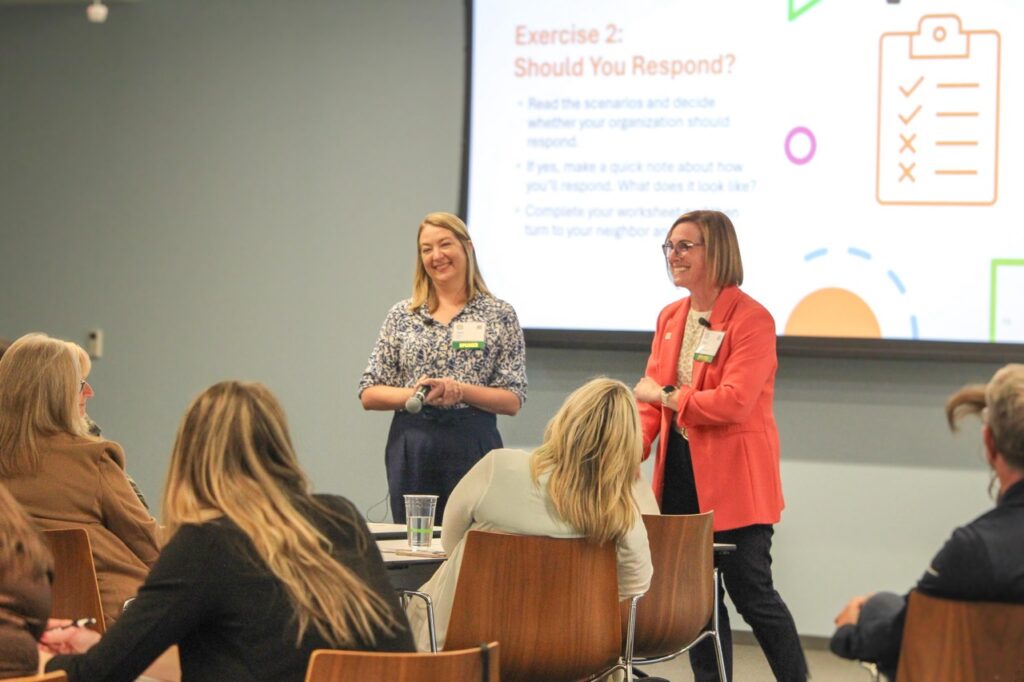
The pre-event workshop, “From Crisis to Clarity: Owning the Message When the Stakes Are High” was led by Jaque Matsen with Relate Strategies and Lauren Neuman with C.O.nxt. The session, held at Dairy Farmers of America headquarters, equipped attendees with practical skills and confidence to communicate clearly and calmly in high-pressure situations. Speakers shared strategies for developing key messages, answering difficult questions, and avoiding common communication pitfalls. During the interactive workshop, attendees worked through real-world scenarios to apply what they had learned, creating a strong kickoff to the Summit and setting the tone for the collaborative discussions ahead. The workshop was followed by an off-site Welcome Reception hosted by DFA.
Telling Agriculture’s Story Under Pressure
Sarah Bohnenkamp, leadership and strategy coach, kicked Summit off with an energizing keynote titled “Leading Under Pressure: Anti-Average Communication Across the Value Chain.” She challenged attendees to rethink how leadership and communication shape the future of animal agriculture. Bohnenkamp emphasized that “communication is code for leadership,” encouraging attendees to “connect instead of correct” when engaging with consumers, stakeholders, and others throughout the supply chain.
Throughout the session, she discussed the importance of self-awareness, emotional intelligence, intentional curiosity, and collaboration, while also highlighting how fear, internal misalignment, and selective transparency can create barriers within the agriculture industry. Bohnenkamp encouraged attendees to “walk a mile in each other’s shoes” and move beyond the mindset of “this is how we’ve always done it.” She noted that communication gaps and selective transparency create hidden costs across the industry, while greater transparency, trust, and intentional collaboration will drive future success in animal agriculture.
Building on the theme of communication and engagement, Chelsea Good with Good & Associates delivered the session “Too Hot to Ignore: Why Animal Agriculture Can’t Opt Out of Political Advocacy.” Good reinforced that advocacy is no longer optional for animal agriculture, as influence increasingly takes place across politicaland digital platforms. She highlighted the lack of agricultural voices in online spaces, which allows misinformation and opposing narratives to fill the gaps.
Good encouraged producers and industry professionals to engage more confidently in advocacy, share authentic stories, and actively participate in digital conversations, emphasizing that “we can’t afford to let ‘keyboard cowboys’ fill the void.” She also discussed shifting generational engagement in associations, the importance of grassroots involvement, and the need for more unified messaging across a highly diverse industry.
Continuing the conversation around communication challenges, Dr. Ken Opengart with 3 Birds Consulting and Polly Ruhland with Ruhland Advisory led an interactive session titled “Uncomfortable Truths: Why Agriculture Is Losing the Room – and How to Rebuild Connection.” The speakers explored why agriculture often struggles to connect with consumers and stakeholders, noting that only a small percentage of consumers have direct ties to agriculture, contributing to misunderstanding and distrust of modern food production.
The session highlighted barriers such as jargon-heavy communication, overreliance on facts instead of meaning, fragmented messaging, and limited emotional storytelling. Speakers emphasized the importance of listening, simplifying messages, and translating agricultural practices into consumer-relevant language. Strengthening partnerships with stakeholders is essential to rebuilding trust and improving understanding of modern agriculture.
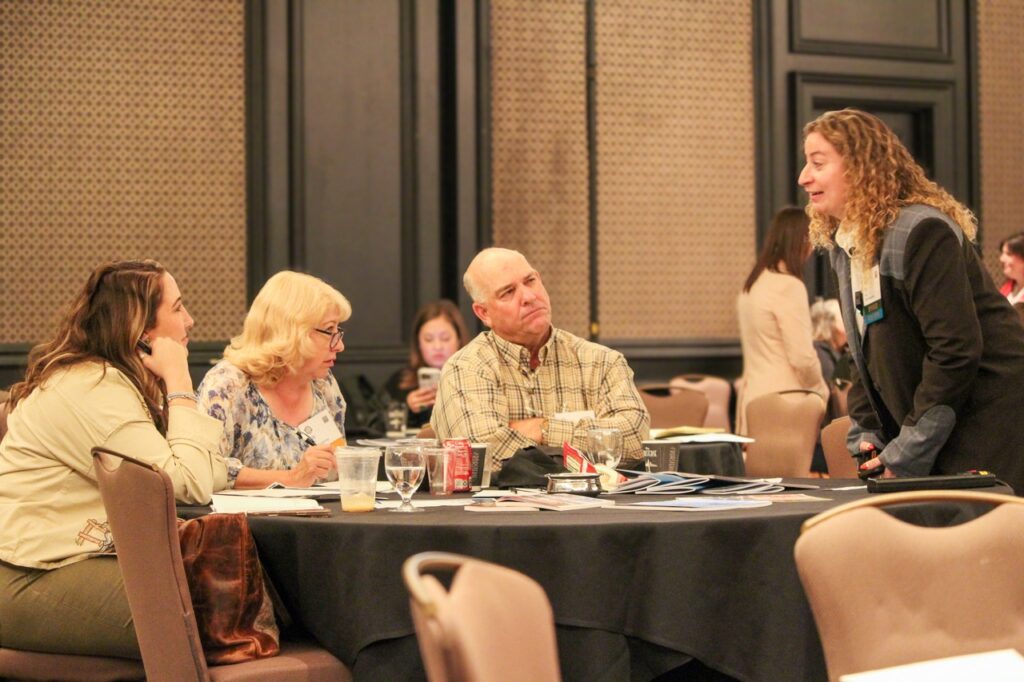
Attendees also had the opportunity to put crisis communication principles into practice during a notable crisis simulation workshop led by Nina Dater with Summit Strategy Group. The exercise challenged attendees to work through a crisis scenario involving a viral whistleblower video. Discussions emphasized how quickly early messaging shapes public perception, noting that initial statements often become the primary source for media coverage and AI-generated summaries, making speed and clarity critical during a crisis response.
“It doesn’t matter if it is a deep fact, public perception is what wins.” — Dater
Dater stressed the importance of coordination between legal and communications teams, thoughtful escalation planning, and leveraging trusted partners and allies across the industry to verify facts and support messaging. She also highlighted that in today’s environment, perception often outweighs technical accuracy, and how organizations respond early in a crisis can significantly influence the long-term narrative.
Transparency, Trust, and Practical Solutions
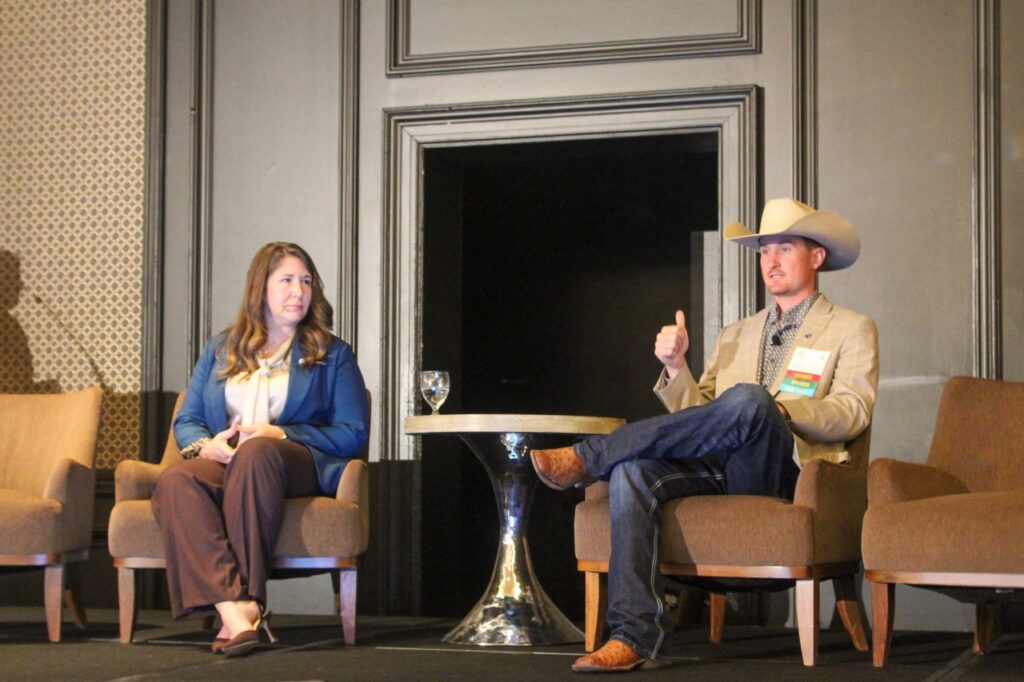
As conversations shifted toward practical solutions and long-term resilience, attendees heard from Stephanie Wetter with the National Pork Board and Callahan Grund with U.S. CattleTrace during the session “Tools of the Trade: Transport, Traceability, and Transparency.” The session speakers emphasized transportation as a central issue in animal agriculture, with impacts spanning animal welfare, food safety, reputation, and overall supply chain resilience.
Because animal transport is often one of the few parts of animal agriculture consumers see firsthand, speakers noted it becomes a defining moment for public perception. Research and data-driven tools such as training, verification systems, AgView, and U.S. CattleTrace were highlighted as key to strengthening disease traceability, improving transparency, and creating value across the supply chain. A major takeaway from the session was that producer-led systems and stronger data sharing can improve efficiency, build consumer trust, and help ensure value is retained throughout the system.
That same focus on transparency carried into the session “Leveraging Sustainability to Build Trust,” featuring Nancy Himmelfarb with Himmelfarb Sustainability Consulting, François Léger with FPL Food, and Rachael Wagner with Eocene. The panel explored sustainability as both a communication challenge and a business strategy. Speakers emphasized that inconsistency or silence around sustainability efforts, often referred to as “greenhushing” can undermine public trust, while clear and authentic communication strengthens credibility.
“If you don’t talk about something you are doing, someone else is going to tell it, and it isn’t the message you want told.” – Léger
Life cycle analysis (LCA) and other data-driven reporting tools were highlighted as important for measuring impact and improving efficiency. Panelists stressed that sustainability messaging should be practical, values-based, and tied to operational benefits and cost savings, while also connecting employees, leadership, and consumers. Transparency, internal alignment, and employee engagement were repeatedly identified as key drivers for building trust across the food supply chain.
Plenty of hot topics were covered at this year’s Stakeholder Summit – too much to fit into one blog post! Keep an eye out for part two of “High Steaks: Navigating Pressure on Animal Protein” and check out our impact report with key takeaways from each session.
Save the date for the 2027 Stakeholders Summit, slated for May 5–7 in Arlington, Va. Follow the hashtag #AAA27 for updates about the upcoming event.
All posts are the opinion of the author and do not necessarily represent the views of the Animal Ag Alliance.